Overseas Shopping 2024 Guide in Hong Kong
Updated: 4 Mar 2024
Written bymoneyhero

With global travel and online shopping becoming increasingly popular, it is particularly important for savvy shoppers to understand credit card charges abroad as they shop overseas, so that they can have the best shopping experience without hefty transaction fees and charges. Many credit card issuers on the market offer perks such as extra cashback rewards for foreign transactions. There are even credit cards without overseas transaction fees. Choosing the best credit card for international transactions during travel not only enhances your travel experience, but also allows you to earn rewards along the way. To help you maximise your rewards on overseas shopping, MoneyHero has compiled a comprehensive guide covering overseas shopping, associated transaction fees, exchange rate differences among networks and credit cards offering benefits for overseas transactions.
What is overseas shopping?
Overseas shopping refers to the purchase of goods or services from merchants registered outside the country or region where your credit card is issued.
There are two scenarios for overseas shopping:
The first one involves making purchases in person while traveling abroad. This type of transaction occurs when you travel outside of Hong Kong and use your credit card to make purchases at local stores in the destination country. For instance, if you use your credit card to pay for a meal at a restaurant in the United States, this transaction is considered overseas shopping since the restaurant is located outside Hong Kong.
The second one involves making online payment to foreign merchants. When you use your credit card issued in Hong Kong to make payments to online merchants or service providers registered in other regions or countries (e.g. Amazon, Spotify, Skype, etc.), it constitutes overseas spending.
Some of these sites or physical stores abroad may offer dynamic currency conversion for credit card payments, allowing cardholders to pay in Hong Kong dollars instead of foreign currency. Nevertheless, they are still considered overseas merchants because of their country/region of registration. Depending on the currency chosen, your credit card issuer may impose certain additional fees known as cross-border fees or foreign currency transaction fees, which we will cover in the following sections. The exact fee structure varies among credit card issuers, but it is important to be aware of these potential charges when making purchases online or abroad.
What is overseas transaction fee?
Broadly speaking, there are two primary types of overseas transaction fees that credit card users may encounter: cross-border fees and foreign currency transaction fees.
These fees are levied by credit card issuers to cover the costs associated with processing transactions conducted outside the cardholder’s home country or in a currency different from the card’s native currency.
Cross-Border Fee
A cross-border fee is incurred when cardholders make purchases at overseas merchants but pay in Hong Kong dollars. The cross-border fee varies depending on the credit card issuer, usually ranging from 0.8% to 1% of the transaction amount, and is charged during settlement. It is important to note that overseas merchants not only include physical stores abroad but also websites registered outside of Hong Kong. Several popular online platforms commonly used in Hong Kong, such as Agoda and Booking.com, fall under this category. They may accept payments in Hong Kong dollars but are registered elsewhere. Therefore, it is quite common for cross-border transaction fees to be applied in such instances.
In addition to the cross-border fee, payments to overseas merchants in Hong Kong dollars involve dynamic currency conversion (DCC). This arrangement does not involve the credit card issuer. Instead, it is jointly provided by the merchant, its associated bank and the foreign exchange dealer overseas. The foreign currency transaction amount is converted into Hong Kong dollars at the time of payment using the prevailing exchange rate, plus an extra percentage of the exchange rate as a mark-up margin, usually ranging from 2.5% to 4%. This, coupled with cross-border fees, can render payment in Hong Kong dollars notably more expensive than paying in foreign currency, even after pricing in the potential foreign currency transaction fees.
Taking all these factors into consideration, if you still prefer paying in Hong Kong dollars for overseas transactions, it is advisable to check the registration location of the website to avoid cross-border fees. That said, most online shopping websites do not explicitly state their registration location and it may be difficult and time-consuming to check every single one of them before making purchases. Therefore, it is best to be mindful of whether your credit card imposes cross-border transaction fees and opt for one that does not charge such fees when making payments to overseas merchants in Hong Kong dollars.
Foreign Currency Transaction Fee
A foreign currency transaction fee is a charge imposed by credit card issuers when a transaction is conducted in a currency other than the cardholder’s native currency, usually applied as a percentage of the transaction amount. The foreign currency transaction fee varies depending on credit card issuer, typically ranging from 1% to 2%. Visa, Mastercard and JCB credit cards usually charge a 1.95% foreign currency transaction fee. As for JCB credit cards, the fee varies depending on the issuing bank, ranging from 1% to 1.95%. American Express credit cards have one of the highest rates, requiring a 2% foreign currency transaction fee.
Nevertheless, there are a wide selection of cards that waive the foreign currency transaction fee. For instance, most UnionPay cards (including debit and credit cards) do not incur foreign currency transaction fees, with the exception of UnionPay credit cards offered by Hang Seng and HSBC, which currently impose fees of 1.2% and 1% ( except for transactions in RMB and MOP) respectively. As a result, when traveling abroad or shopping with foreign currency, many prefer using UnionPay credit cards to avoid the foreign currency transaction fee.
Apart from the foreign currency transaction fee, exchange rates also play a significant role in foreign currency transactions. These rates differ from one card to another but are typically determined by the credit card networks such as VISA, Mastercard and American Express. While you may not have access to the precise exchange rate during the transaction, you can still check the rates provided on the official websites of these credit card networks for reference. The actual exchange rate for the foreign currency transaction may be detailed on your credit card statement.
Credit Cards without Overseas Transaction Fees
If consumers seek to avoid foreign currency transaction fees, they can choose credit cards that do not impose such charges. UnionPay cards are renowned for waiving foreign currency transaction fees, making them one of the most popular options among travelers and shoppers. Apart from UnionPay credit cards, some other cards, such as the Standard Chartered Smart Credit Card, also offer similar benefits, ensuring cardholders can make purchases abroad without incurring hefty fees. Below is a table outlining some of the credit cards waiving foreign currency transaction fee in the market:
Comparison of credit cards without foreign currency transaction fee
|
Credit cards without foreign currency transaction fee |
Overseas spending rebate |
Foreign currency transaction fee |
Annual income requirement |
|
2%
|
0%
(Transaction fee waived by UnionPay)
|
HK$150,000 / student
|
|
|
0.55%
|
0%
(Transaction fee waived)
|
HK$96,000
|
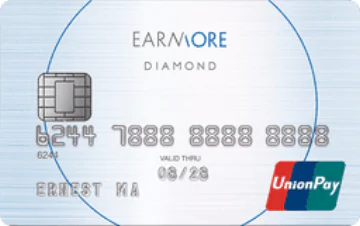
PrimeCredit EarnMORE UnionPay Diamond Card
- Foreign txn rebate
- Travel agency offer
- Installment
Pay with EarnMORE UnionPay Credit Card and enjoy 2% direct cash rebate
- 2% cash rebate (1% basic rebate + 1% extra rebate) on year-round spending
Easy and instant payment with in-app UnionPay QR code function in OmyCard app
- Enjoy "Hot Deals Patrols" limited-time offers through the app. You can buy popular products at a discounted price.
Annual fee waiver for the first 2 years
Other things to note
- Welcome offers Approval Cash Rebate Offer and MoneyHero exclusive offer are applicable to applicants who are not holding and / or have not held any Credit Card issued by PrimeCredit in the past 6 months.
- Each card can be entitled to a maximum amount of HK$1,500 extra 1% cash rebate during the Promotion Period.
- The promotion period of 2% year-round rebate is valid from 1 July 2026 to 30 Jun 2027.
- Selected spending offers
| Region | Spending with a BNP credit card can enjoy the following offers | Promotional period |
|---|---|---|
| Mainland China |
|
From now until December 31, 2026 |
| By registering for exclusive UnionPay 'Splendid China' benefits, you can enjoy the following benefits for merchants in Mainland China: | ||
| Airport privilegesSpend RMB1500 or more offline within Mainland China for a chance to enjoy one complimentary airport VIP service within Mainland China. For details, click here | From now until December 31, 2026 | |
| Transportation and travel
|
||
| Supreme LifestyleSpend RMB500 or more offline within Mainland China to receive a Klook 50% off voucher (up to USD 15). For details, click here | ||
| Chinese cuisine
|
||
| Japan |
|
From now until December 31, 2026 |
| Macau | Present valid PISA exclusive electronic coupons from the "Preferential Plan" section when shopping at PISA Macau stores using UnionPay cards or UnionPay QR codes to enjoy the following instant discounts:
Net spending of MOP 200,000 or more in a single transaction gets MOP 3,500 off instantly. For details, click here |
From now until March 31, 2027 |
| Taiwan | At Momanton Sportswear standalone stores, pay with UnionPay cards to enjoy a 30% discount on products above 30% off, plus an additional 5% off. For details, click here | From now until December 31, 2026 |
Best Credit Cards for International Transactions
In addition to selecting credit cards that waive overseas transaction fees, another effective strategy to reduce transaction costs is using cards that offer decent cashback or rewards for overseas and/or foreign currency spending. By choosing a card with high rebates, cardholders can partly or fully offset the potential difference incurred from transaction fees. This approach not only helps minimise the fees associated with international transactions but also maximises the benefits gained from using credit cards for overseas purchases. The table below presents a list of selected credit cards renowned for their attractive overseas spending rebates.
|
Credit card for foreign currency spending |
Overseas spending rebate |
Foreign currency transaction fee |
Annual income requirement |
|
Selected cashback credit cards for foreign currency spending
|
|||
|
Welcome bonus:10% rebate*;
|
1.95%
|
HK$150,000
|
|
|
6%
(Must accumulate spending of HK$5,000 within the month)
|
1.95%
|
HK$150,000 / student
|
|
|
5%
(Rebate capped at HK$150/month) |
1.95%
|
HK$150,000
|
|
|
4.4% or HK$2.27/mile
(With Overseas and Mainland China Spending registered as “Red Hot Rewards of Your Choice”)
|
1%
( except for transactions in RMB and MOP) |
HK$150,000
|
|
|
3.6% or HK$2.78/mile
(With Overseas and Mainland China Spending registered as “Red Hot Rewards of Your Choice”)
|
1.95%
|
HK$360,000
|
|
|
3% rebate on Japan spending
|
1%
|
No annual income requirement
|
|
|
2%
|
1.95%
|
HK$120,000
|
|
|
HK$4/mile
|
HK$600,000
|
||
|
*The above rewards consist of a 6% cashback reward + 10% welcome offer
|
|||
|
Selected mileage rebate credit cards for foreign currency spending
|
|||
|
HK$3/mile
|
1.95%
|
HK$120,000
|
|
|
HK$4/mile
|
1.95%
|
HK$96,000
|
|
|
4% or HK$4/mile
|
1.95%
|
HK$120,000
|
|
|
HK$4/mile
|
1.95%
|
HK$240,000
|
|
|
2.5% or HK$2/mile
|
1.95%
|
HK$240,000
|
|
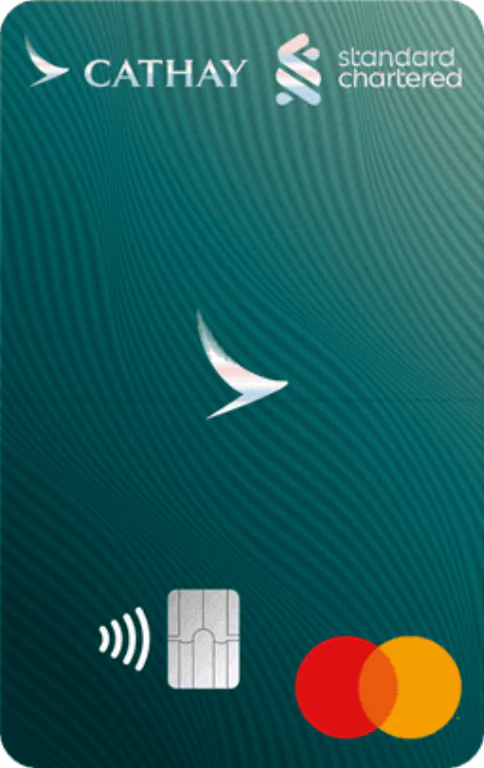
Standard Chartered Cathay Mastercard
- Welcome offer: Air miles
- Air miles conversion
- Hotel bookings offer
- Overseas rebate
Miles will be automatically credited to your Asia Miles membership accounts with no mileage conversion fee
- Up to HK$2 = 1 Asia Mile for eligible spending on Cathay and HK Express#
- #Eligible spending includes Cathay flight tickets, shopping and bookings with Cathay Holidays, and HK Express flight tickets and duty-free items.For every HK$8,000 accumulated eligible spending on Cathay and HK Express directly, cardholders can earn: Basic Miles: up to (A)2,000 (HK$4=(A)1 for eligible online spending, HK$6=(A)1 for eligible spending in other categories); and Extra Miles: (A)2,000.
- HK$4 = 1 Asia Mile for eligible spending on dining, hotels and overseas spending categories
- HK$6 = 1 Asia Mile for eligible spending in other categories which are posted in Hong Kong dollars
10% discount on Asia Miles Awards redemption
- Hotel, Car Rental and Experience Awards;
- Dining awards or settle bill with miles; and
- Asia Miles Mileage Renewal fee, Mileage Transfer fee and purchase of Asia Miles Gift Miles.
First-year annual fee waiver
- New clients can enjoy first-year annual fee waiver. Cardholders will enjoy an annual fee waiver on their Cards for a year (beginning from the respective anniversary of the issuance date of their Cards) if they are Priority Banking clients or Premium Banking clients meeting the relevant Minimum Relationship Balance requirement, or payroll account clients.
Other things to note
- New Cardholders are applicants who do not currently hold and have not cancelled any principal card of Standard Chartered Credit Card or MANHATTAN Credit Card issued by Standard Chartered Bank (Hong Kong) Limited in the past 6 months from the date of approval of their current applications for a principal card of the Standard Chartered Credit Cards.
- Transfer/top up transaction from the Card account to any account as designated by Standard Chartered from time to time, including but not limited to, Octopus Wallet, Alipay account, transactions effected through Faster Payment System and other digital payment made through Standard Chartered Online Banking do not count as Eligible Transactions.
- An Asia Miles Account is required before applying for the Standard Chartered Cathay Mastercard, please click here to redirect to the Asia Miles Account registration page
- For more information, please refer to here.
Frequently asked questions about Overseas Shopping
1. What fees are likely to be incurred when using credit cards for overseas transactions?
Depending on the currency used for payment, overseas transactions often include foreign currency transaction fees or cross-border fees. Usually calculated as a certain percentage of the transaction amount, these fees are charged by credit card issuers and can differ based on the credit card issuer and network.
2. What other factors should be taken into consideration when using credit cards for overseas transaction payment?
Apart from the fees linked to overseas or foreign currency transactions, the currency exchange rate is another crucial aspect that is often overlooked but can greatly affect the total amount paid. For example, while UnionPay cards often waives foreign currency transaction fees, the exchange rates they adopt for such transactions may be less favourable compared to other credit card networks like Visa, Mastercard and American Express, it is also less widely accepted. Therefore, in order to reduce the total amount paid, it is essential for consumers to take exchange rates into account.
3. Are there any restrictions or special terms and conditions for earning rebates on overseas or foreign currency?
Many credit cards impose limits on the amount of extra rebates cardholders can earn for overseas spending by setting monthly or quarterly rebate caps. Some credit cards, such as HSBC EveryMile Card and HSBC Pulse UnionPay Dual Currency Diamond Credit Card, require registration beforehand to qualify for their extra rebate rates on overseas or foreign currency transactions. It is also important to note that paying for overseas transactions in Hong Kong dollars might not be eligible for special rebates on overseas spending under the policies of certain banks.
4. Is it always better to pay for overseas transactions in the currency of the destination country than in Hong Kong dollars?
While the actual amount to be paid depends on several factors, paying in foreign currency usually costs less than paying in Hong Kong dollars due to the notable mark-up margin of exchange rates and potential cross-border fees associated with dynamic currency conversion, which can easily offset the savings from foreign currency transaction fees. Nonetheless, paying in Hong Kong dollars does offer the advantage of locking in the exchange rate at the time of payment, thus avoiding the risk of rate fluctuations during the period between the payment and completion of transactions.
Visit MoneyHero’s Blog for more money saving tips and financial advice. Don’t forget to follow our Facebook Page for more useful news and deals!
About the author
Related articles

Asia Miles Credit Card Earning Guide 2026: With Latest Redemption Chart
Whether you're a frequent flyer or someone who's heard of Asia Miles but never used it, this comprehensive guide covers everything you need to know about earning and redeeming this valuable currency. Asia Miles is Cathay Pacific's frequent flyer programme, allowing you to accumulate miles and redeem them for flights on Cathay Pacific (CX) and partner airlines within the Oneworld alliance. With major banks continuously launching new miles credit cards offering conversion rates as low as HK$2 per mile, the landscape has never been more rewarding. Let's dive into which cards are best, how to maximise your Asia Miles earning potential, and the latest updates following the recent changes.